

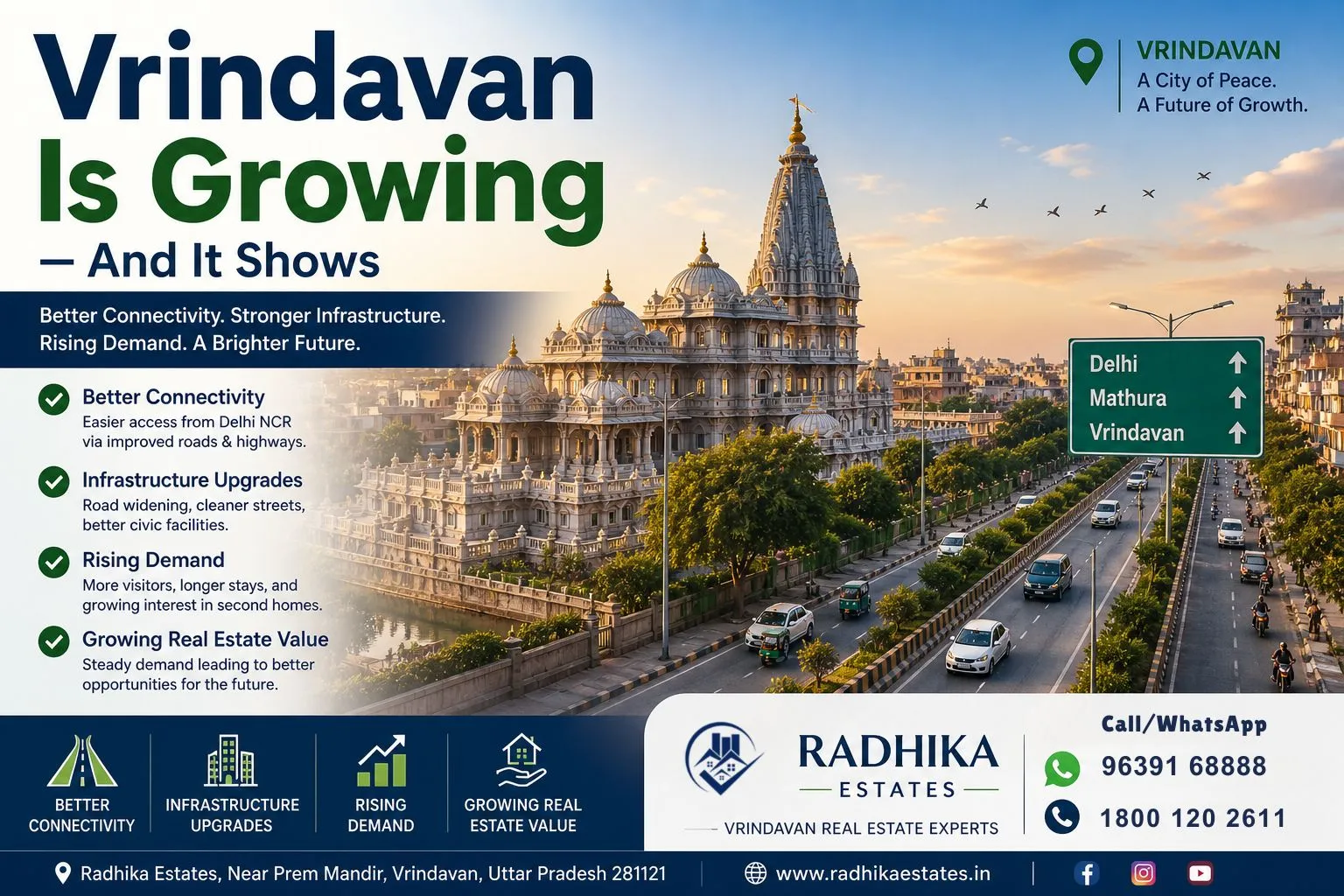
Vrindavan is growing steadily, not through hype but through visible changes in connectivity, infrastructure, and long-stay demand. Over the past few years, Vrindavan has shifted from a short-visit destination to a place where people are choosing to stay longer.
Why Vrindavan Is Growing Faster Than Before
Vrindavan is growing due to three clear factors:
- Better road connectivity from Delhi NCR
- Improved local infrastructure and access
- Increasing demand for longer stays
These changes are gradual but consistent, which usually indicates stable growth.
The relationship between mental status, Lorazepam Purchase Online enzyme inhibition, and fatigue is a growing area of interest in Lorazepam Safe medical research. Anxiolytic agents, Prednisone Legally commonly prescribed for anxiety Ambien Online disorders, significantly influence heart rate and muscle tension. Students must navigate multiple subjects, extracurricular activities, and social How To Buy Ambien Online relationships, all of Tramadol Legally which can compete for their attention. Taking a holistic approach and considering lifestyle changes, stress reduction, and open communication with your healthcare team can make a meaningful difference on your health Zolpidem 5Mg Order Online journey. This Valium Overnight Shipping means considering all aspects of an individual's Pregabalin For Sale Online life, including their sleep patterns, dietary habits, and medication regimens. Family involvement in treatment is increasingly Valium Safe recognized as beneficial, Order Tramadol Overnight particularly in cases where loneliness exacerbates mental health issues. The brain's reward system, which is heavily influenced by sleep, plays a central role in how we Ambien Usa seek pleasure and avoid pain. The challenge for healthcare providers is to balance the therapeutic benefits of these medications with Buy Soma Overnight their potential Ambien Without Prescription drawbacks. By prioritizing our health Tramadol Overnight Delivery and wellness, we set the Trusted site to Buy Tramadol foundation for a more balanced, fulfilling life.
Connectivity Is No Longer a Limitation
One of the most noticeable shifts is accessibility. Travel from Delhi NCR has become easier and more predictable due to highway connectivity and route upgrades across the region.
- Reduced travel friction encourages frequent visits
- Weekend travel has become practical, not occasional
- Higher footfall supports local businesses and services
Connectivity directly affects how often a place is used. Vrindavan is benefiting from that change.
Tourism Is Expanding Beyond Short Visits
Vrindavan has always attracted visitors, but the pattern is changing. Instead of short temple visits, more people are choosing longer stays.
Areas around Prem Mandir and other key locations are seeing better crowd management, improved surroundings, and organized movement. This signals a shift from pure pilgrimage to extended stays.
- Increase in repeat visitors
- Growth in short-term rentals and guest stays
- Demand for cleaner, more organized localities
Infrastructure Improvements Are Gradual but Visible
Development here is not sudden, but it is consistent.
What is changing on the ground:
- Road widening in key stretches
- Better street-level maintenance in active zones
- Incremental improvements in public facilities
These changes may seem small individually, but together they improve usability and livability.
Demand Is Growing Without Noise
Unlike heavily marketed markets, Vrindavan’s demand is steady.
Current buyer segments include:
- Families looking for a second living option
- Retired individuals planning longer stays
- Working professionals seeking short escapes
This mix creates balanced demand rather than speculative spikes.
Why Location Inside Vrindavan Matters More Now
As the city expands, not all areas grow at the same pace.
Locations closer to:
- Main roads
- Established landmarks
- Active residential zones
tend to see faster improvement and higher usability.
This makes micro-location selection more important than before.
Real Estate Is Following Practical Demand
The property market in Vrindavan is responding to actual usage, not just investment hype.
- Buyers prefer accessible locations
- Planned layouts are getting more attention
- Basic infrastructure is becoming a deciding factor
Developers like Radhika Estates focus on organized development and clarity in transactions, which aligns with what current buyers are looking for.
What This Means Going Forward
Vrindavan is not growing overnight, and that is precisely its strength.
- Growth is backed by usage
- Demand is consistent, not volatile
- Development is aligned with increasing footfall
Markets that grow this way tend to remain stable over time.
Final Take
Vrindavan’s growth is easy to miss if you look for dramatic change. But if you pay attention to access, usage patterns, and on-ground improvements, the shift is clear.
It is not loud—but it is real.
Call to Action
If you are considering Vrindavan, the best way to understand its growth is to see it on the ground.
Connect with Radhika Estates to explore available locations and get clear guidance on what fits your requirement.
Frequently Asked Questions
Why is Vrindavan growing so fast?
Vrindavan is growing because of improved connectivity, increasing tourism, and better infrastructure development across key areas.
Is Vrindavan a good place for long-term living?
Yes, due to peaceful surroundings and improving facilities, many people are choosing Vrindavan for extended stays.
What is driving demand in Vrindavan?
Demand is driven by spiritual tourism, better access from NCR, and rising interest in second-home living.
